In towns and cities across Thailand, a small, brightly coloured pill has become an engine of social disruption. From lorry drivers pushing through sleepless nights to young people in bustling urban centres navigating the pressures of modern life, its reach is pervasive. Known as yaba, or the “crazy drug,” these tiny tablets of methamphetamine and caffeine are at the heart of one of the nation’s most profound and persistent public health challenges.
For decades, the story of yaba has been told through the lens of enforcement, statistics of record-breaking seizures, and the grim geopolitics of the Golden Triangle. But behind the headlines are countless personal stories of struggle, families strained to their breaking point, and a public health system grappling with a crisis that outpaces its resources.
As the government continues its complex and often contradictory efforts to manage the issue, a quieter conversation is taking place—one focused not on punishment, but on recovery. For those with the capacity to seek help, the path toward healing is increasingly found in quiet, restorative spaces that offer a different approach. In the tranquil foothills of Northern Thailand, a model of care is emerging that prioritises evidence, dignity, and the difficult, delicate work of rebuilding a life.
This article will explore the complex reality of yaba in Thailand before turning to what a comprehensive, private rehabilitation journey can look like in a place designed for recovery.
To understand the grip of yaba on Thai society is to understand its evolution. The drug’s active ingredient, methamphetamine, first became a part of the country’s landscape in the 1960s, a period of intense industrialisation and development. It was not seen as a scourge but as a tool. Marketed as ya-khayan, or the “diligence drug,” it was legally available at petrol stations and rural shops.
For long-haul truck drivers, fishermen facing exhausting voyages, and agricultural workers performing gruelling manual labour, it was a functional aid. The combination of methamphetamine, a powerful central nervous system stimulant, and caffeine offered a burst of energy, wakefulness, and stamina, allowing workers to meet the demands of a rapidly expanding economy. During this era, its use was largely confined to the labouring classes and viewed through a lens of utility.
The 1970s marked a turning point. The Thai government outlawed the substance in 1970, and its name shifted in the underground market to ya-ma, or “horse medicine,” reflecting its reputation for delivering raw power. Yet its use remained deeply embedded within certain professions.
A more significant-sociological shift occurred in the mid-1990s. As Thailand’s economy grew, the user profile began to change, moving from rural labourers to a younger, more urban demographic.
For some young people, the drug was not an act of overt rebellion but a perceived necessity to keep pace with the pressures of a fast-moving society. Peer influence became a primary driver of initiation, with use framed as a key to gaining a sense of belonging within certain social circles. Researchers have noted that for a significant minority of young users, family conflict and emotional distress serve as catalysts, with the substance offering a temporary escape.
Recognising this alarming trend, the government launched a deliberate rebranding campaign in 1996, officially changing the drug’s name from the functional-sounding ya-ma to the alarming yaba, or “crazy drug.” The aim was to stigmatise its use and highlight the growing public awareness of associated psychosis and violence. But a name change alone could not halt its spread.
The enduring flow of yaba into Thailand is inextricably tied to the volatile geopolitics of the Golden Triangle, the mountainous border region where Thailand, Myanmar, and Laos converge. Historically infamous for opium cultivation, this area has transformed into a global hub for the production of synthetic drugs. Methamphetamine offers criminal syndicates a more lucrative and reliable product, free from the constraints of seasonal poppy harvests.
Myanmar, particularly its conflict-ridden Shan State, remains the epicentre of yaba production. In regions beyond effective government control, ethnic armed groups have come to rely on drug profits to fund their military operations, running industrial-scale labs with relative impunity. The scale of this production is staggering. By 2010, it was estimated that one billion yaba tablets were being trafficked into Thailand each year.
Recent data paints an even more dramatic picture. According to the United Nations Office on Drugs and Crime (UNODC), a record 236 tonnes of methamphetamine were seized across East and Southeast Asia in 2024, a 24% increase from the previous year. The overwhelming majority of this was intercepted in Southeast Asia, with the Mekong sub-region accounting for 200 tonnes alone.
Despite Thai authorities seizing a record 139 million yaba pills in 2024, law enforcement efforts are consistently outpaced by the sheer volume of production. Traffickers exploit porous borders, particularly the long frontier with Myanmar, moving vast quantities of pills. When one route is disrupted, another quickly materialises. This has created a relentless loop, where enforcement victories, while significant, do little to stem the overall tide.
A typical yaba pill contains around 30% methamphetamine, delivering an intense, euphoric high that can last for hours, followed by a debilitating comedown of exhaustion and paranoia. Its low street price, sometimes as little as a few pence per pill in some areas, makes it alarmingly accessible to the most vulnerable.
Thailand’s official response to the crisis has been a mixture of strict enforcement and tentative public health reforms. A controversial policy allowing for the possession of up to five yaba tablets was intended to distinguish users who need help from traffickers who deserve punishment, though this measure is under review. While a step towards treating addiction as a health issue, it has existed alongside a critical shortfall in accessible and effective treatment infrastructure.
Formal rehabilitation services remain scarce and unevenly distributed, particularly in rural areas. The public mental health system is under immense strain. Thailand has only 1.28 psychiatrists and 1.57 psychologists per 100,000 people—far below the global average.
Wait times for psychiatric care at public hospitals can stretch for months, leaving many individuals and families feeling abandoned. This gap has forced some to turn to grassroots alternatives, such as temple-based detox programmes, which, while providing community and discipline, lack clinical oversight and evidence-based methods.
This landscape of overwhelming need and limited public resources has created space for a different kind of solution. For those who can afford it, the private rehabilitation sector offers a path to recovery grounded in medical science, psychological support, and a restorative environment.

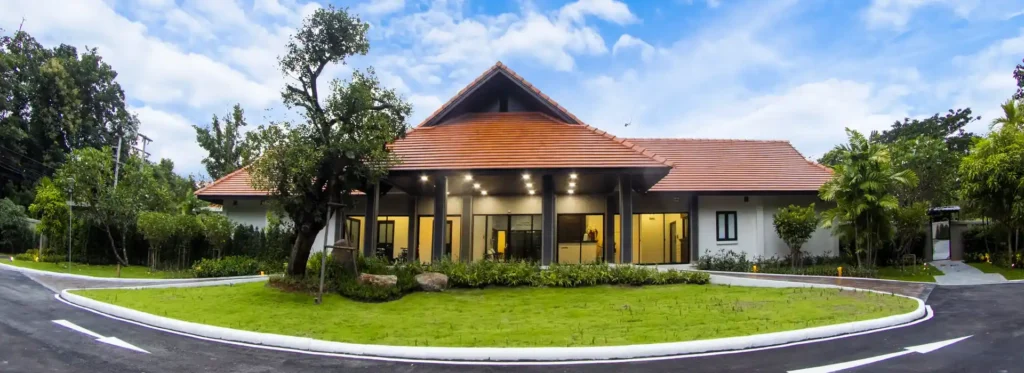
Nestled in the green foothills of Northern Thailand, about a 30-minute drive from Chiang Mai’s international airport, a different approach to addiction treatment is taking shape. Here, the focus shifts from the chaos of addiction to the calm of recovery. Centres like The Hills Rehab represent a boutique model of care, deliberately keeping their capacity low to ensure that each person’s journey is deeply personal and supported.
The philosophy is straightforward: create a private, peaceful sanctuary where individuals can step away from the triggers and stressors of their daily lives and focus entirely on healing. It’s a world away from the sterile image of a hospital or the austerity of a boot camp. Instead, the environment is designed to feel like a world-class facility, where a healthy mind and body are nurtured through a blend of clinical expertise and holistic wellness.
For many who arrive seeking help for yaba dependence, the first and most intimidating hurdle is detoxification—the process of the body clearing itself of the substance. The withdrawal can be physically and psychologically gruelling. High-quality inpatient centres address this with a medically supervised detox protocol.
What sets a centre like The Hills apart is its on-site medical and mental health clinics, staffed with doctors, psychiatrists, and a 24-hour nursing team. This level of medical infrastructure is rare in Thailand’s private rehab landscape. Upon arrival, a senior addiction expert conducts a thorough clinical assessment to determine what level of medical support is needed.
Yaba addiction is often intertwined with underlying mental health conditions such as depression, anxiety, or post-traumatic stress disorder (PTSD). In many cases, individuals began using the substance as a way to self-medicate emotional pain. Treating the substance use alone, without addressing these co-occurring disorders, often leads to relapse.
Therapeutic approaches are evidence-based, drawing from established modalities like cognitive behavioural therapy (CBT), which helps residents identify and change the harmful thought patterns that fuel substance use. Dialectical behaviour therapy (DBT) is also used to build crucial skills in emotional regulation and distress tolerance, equipping patients to manage cravings and stress without resorting to the drug.
A central component of the residential programme is a structured daily and weekly schedule designed to restore routine and promote well-being. A typical day balances intensive therapeutic work with restorative practices for the mind and body.
Evenings are for reflection, and weekends balance continued structured support with opportunities for relaxation and practice. Community outings are organised to allow patients to practise their new coping skills in real-world settings, while other times are set aside for self-care services. This rhythm helps to slowly replace the chaotic patterns of addiction with healthy, predictable, and life-affirming routines.
Recognising that the pressures and needs of young people are distinct, specialised programmes are also available. The youth programme at a centre like The Hills is designed for young adults aged 18 and older, focusing not just on recovery but on broader personal development.
Furthermore, leading centres understand that addiction is a family disease. The strain it places on relationships can be immense. For this reason, family support is integrated into the care model. This involves providing education for relatives about the nature of addiction and offering family therapy sessions to improve communication.
The journey of recovery does not end when a person leaves the sanctuary of a residential treatment centre. A crucial part of a high-quality programme is comprehensive aftercare planning. Before a patient is discharged, the medical team works with them to create a detailed plan for their transition back into daily life.
The challenge posed by yaba in Thailand is deeply entrenched. While enforcement will always play a role, the crisis has demonstrated the profound limitations of a response based solely on punishment. The path forward must also be paved with compassion, understanding, and an unwavering commitment to evidence-based treatment.
Yaba is a tablet form of methamphetamine mixed with caffeine. It is commonly produced and trafficked in Southeast Asia and is known for its stimulant effects, including increased energy, alertness, and euphoria.
Yaba strongly affects the brain’s dopamine system, which regulates pleasure and motivation. Repeated use reduces the brain’s natural ability to manage mood and stress, leading to tolerance, dependence, and intense cravings.
Yaba is most often crushed and smoked, but it can also be swallowed or, less commonly, dissolved and injected. Smoking delivers the drug rapidly to the brain, increasing both its intensity and addiction potential.
Yaba use can cause heart problems, overheating, paranoia, hallucinations, anxiety, and aggressive behaviour. Long-term use is linked to cognitive impairment, dental damage, malnutrition, and severe mental health disorders such as psychosis and depression.
Yes. Treatment typically involves medically supervised detox when needed, followed by structured therapy to address psychological dependence and underlying mental health conditions. Evidence-based approaches such as cognitive behavioural therapy and trauma-focused therapies are commonly used in recovery programmes.
Are you in need of assistance on your journey to recovery? Contact us. We are here to help. At our reputable rehab center, we offer a complimentary consultation to provide guidance and support tailored to your specific needs.
"*" indicates required fields
Interested in learning more about our programmes? Download our brochure to discover the services we offer.
Please select the programme brochure you’re interested in.
TH:
USA/CAN:
Thailand :
UK:
AUS:
Whatsapp: